Region
India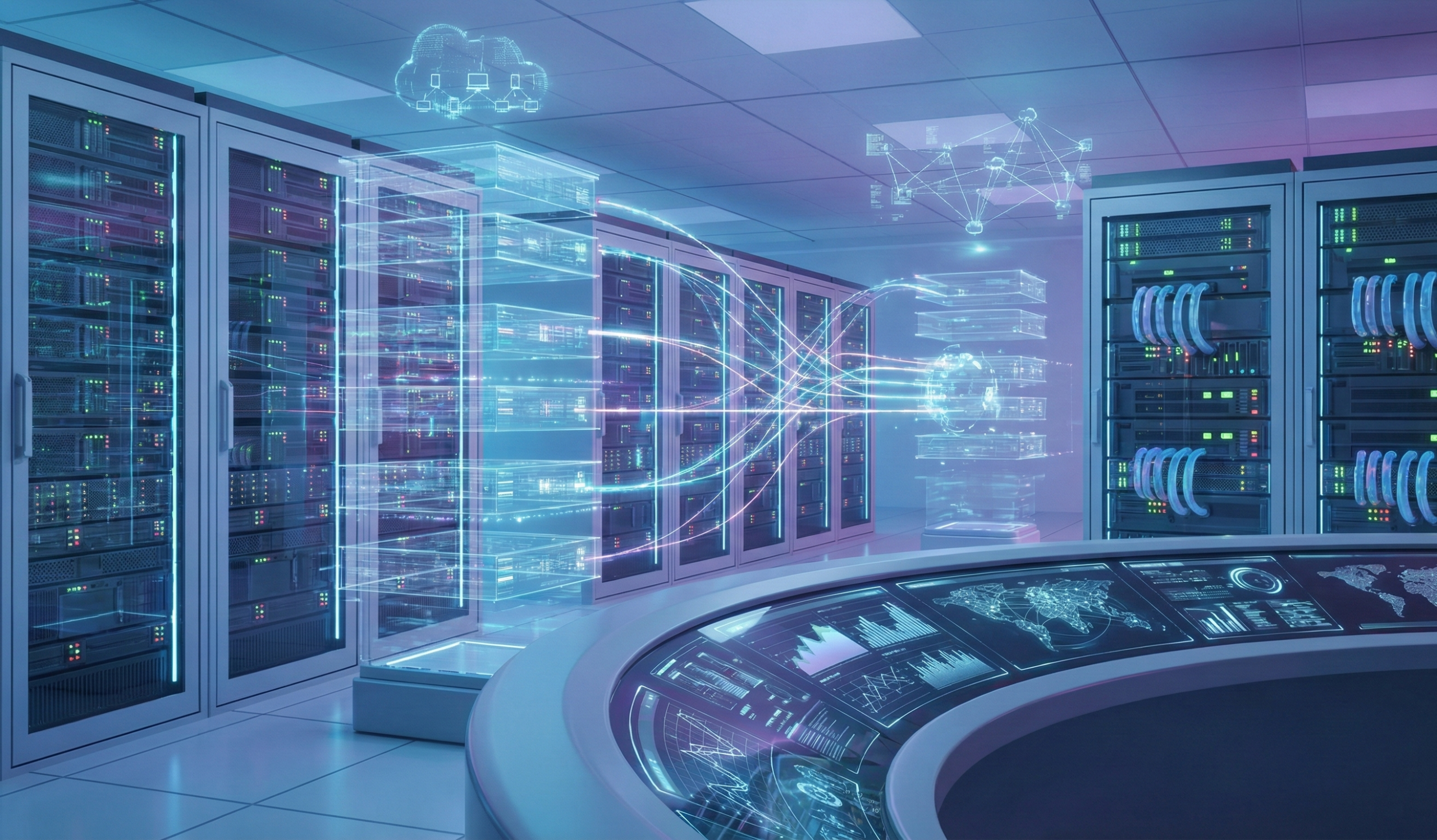
Technological innovation powered by AI is bringing a seismic digital transformation and reframing the future of data centers. With companies adopting AI, cloud, security, and advanced edge computing solutions, data centers continue to be a strong backbone for the tech industry. With projections indicating a rise of hyperscale data centers with $1.8 trillion capital expenditure from 2024 to 2030, traditional infrastructures are upgrading into hyperconverged infrastructure (HCI). Unlike conventional architecture, the HCI is a software-defined data center that integrates compute, storage, and networking all into a unified platform.
The future of the data center rests on high demand for AI-ready capacity, HCI solutions, and network virtualization. This blog highlights the inevitable infrastructure modernization to make the data centers’ future ready.
Need for Modernization of the Data Centers
The data center market is forecast to grow by USD 535.6 billion from 2024 to 2029. Modernizing infrastructure is critical. The data center renaissance is driven by increased artificial intelligence workloads. Hyperconverged infrastructure simplifies power distribution, cooling systems, and energy efficiency. Rising demand for data centers highlights the need for hyperconverged infrastructure. HCI creates virtual versions of each component: compute, storage, and networking.
Data centers are preparing to unlock next in transformation and two technologies that stand at forefront of this change are – Hyperconverged Infrastructure (HCI) and Network Virtualization. Shifting from a hardware approach to a software-first defined infrastructure enables organizations to automate operations and scale infrastructure.
Importance of Hyperconverged Infrastructure
The traditional data center architecture relies on hardware systems separately for each of the components – servers, processors, networking, and storage. However, these hardware-centric stacks add complexity as each system needs separate handling. However, hyperconverged infrastructure creates a unified system by combining compute, storage, and networking, which ensures operational simplification and management.
Here are some of the benefits of adopting an HCI solution for the data centers:
- Simplified Management – By unifying the interface for all the infrastructure components, HCI streamlines IT management. This effectively minimizes complex administrative tasks, automates resource pooling, and reduces time spent on maintenance or upgrades. IT administrators gain centralized visibility, enabling faster problem resolution.
- Better Scalability and flexibility – HCI solutions offer flexible scalability for the infrastructure as required by the business. It enables organizations to increase their compute, networking, or storage resources as per the workload.
- Better Affordability – HCI solutions help in reducing overall cost by saving on both capital and operational expenditure. Organizations have experienced significant cost reduction as the integrated software-defined solution reduces dependency on expensive hardware.
- Improved Disaster Recovery – HCI offers integrated and advanced disaster recovery capabilities, ensuring business continuity. The platforms offer multi-site disaster recovery and robust data protection, safeguarding against loss. With automated failover mechanisms, it is convenient to detect infrastructure failures.
- Ease of deployment – Hyperconverged infrastructure enables ease of infrastructure deployment, followed by quick, convenient launch of applications. One of its biggest benefits is time-to-market acceleration for new services and applications.
- Energy efficiency – Adopting HCI also means a significant reduction in the data center’s power consumption, making the organization energy efficient. Modern HCI-based solutions reduce average energy consumption and eliminate the requirement for separate storage.
- Optimized resource use – As HCI offers optimized data paths, it helps with better resource management. Also, it helps with faster data processing, reduces latency, and improves overall responsiveness.
- Advanced Data Protection – Integrated data protection keeps information safe and secure. Robust security measures enhance overall data resilience.
- Simplified Cloud Integration – Whether it is hybrid or multi-cloud integration, the hyperconverged infrastructure in the data centers offers a smooth transfer of data and setup.
Network Virtualization and Software-Led Evolution
One of the biggest transformations in the data centers is network virtualization , which involves decoupling separate hardware functions to unify them into software-defined services. In simple terms, it creates virtual versions of all the physical hardware, like servers, storage, and networking resources. This enables numerous virtual machines to run on a single physical network infrastructure.
Network virtualizations have many advantages over traditional infrastructure, as they enable dynamic allocation, flexibility, and reconfiguration of network resources. Software-defined networking also helps with optimal performance as the virtual networks can be tailored as per the workload and business requirements. From simplified network management to increased scalability, it has completely transformed the data centers and their capabilities.
The future of data centers hinges on modernizations of IT infrastructure with a focus on hyperconverged Infrastructure and network virtualization. The unprecedented rise in AI workloads projects the growth of data centers and, with it, the adoption of a software-defined approach with HCI solutions unifying compute, storage, and network. Combined with network virtualization’s dynamic resource allocation capabilities, these technologies create an agile, scalable infrastructure that meets modern enterprise demands.
Know more advanced technology that shapes the data centers of the future. Connect with Redington to modernize your IT infrastructure for your business.