How to Reduce Storage Latency in Enterprise Environments | Dell PowerStore
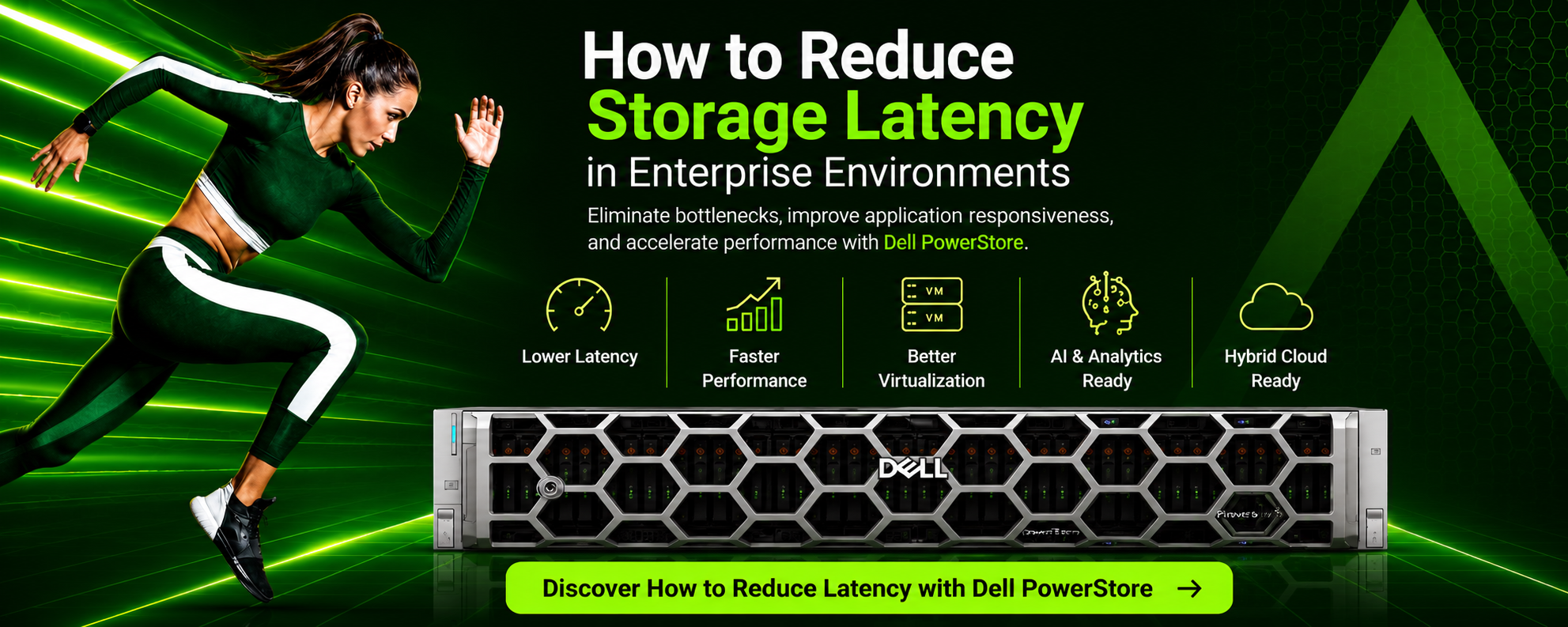
Dell PowerStore low-latency enterprise storage infrastructure banner

Storage Performance

UnlockNext™: Reduce Storage Latency with Modern Enterprise Infrastructure

As organizations expand virtualization environments, AI initiatives, analytics platforms, and hybrid cloud operations, storage latency can become a major barrier to performance and productivity. Dell PowerStore helps enterprises reduce latency, improve workload responsiveness, eliminate infrastructure bottlenecks, and build scalable infrastructure designed for future growth.

Low-Latency Performance Faster Application Response NVMe-Based Architecture VMware & AI Ready Scalable Enterprise Infrastructure

Executive Summary

Storage latency is one of the most common causes of application slowdowns, virtualization bottlenecks, analytics delays, and AI workload inefficiencies.

This page explores the root causes of enterprise storage latency, how latency impacts business performance, and how Dell PowerStore helps organizations modernize infrastructure through NVMe-based performance, intelligent automation, and scalable architecture designed for modern enterprise workloads.

The Problem

Why Storage Latency Is Slowing Modern Enterprise Infrastructure

Enterprise applications are becoming increasingly dependent on real-time data access, virtualization performance, analytics responsiveness, and AI-driven processing.

As workloads become more data-intensive, traditional storage systems often struggle to deliver the speed and consistency required to maintain performance across modern enterprise environments.

Slow Application Performance

Latency can reduce responsiveness across business-critical applications.
VMware Bottlenecks

Virtualized environments require faster and more consistent storage performance.

Analytics Delays

Data-intensive workloads may struggle with slower storage response times.

AI Processing Challenges

AI and machine learning environments require low-latency infrastructure.

Growing Infrastructure Complexity

Scaling legacy environments often increases operational inefficiencies.

Hybrid Cloud Demands

Modern enterprises require consistent performance across cloud-connected environments.

Root Causes

Common Causes of Enterprise Storage Latency

For business leaders, storage latency directly impacts employee productivity, customer experience, application performance, operational efficiency, and business agility.

As organizations rely more heavily on digital services and data-driven decision-making, reducing latency becomes essential for supporting growth, innovation, and competitive advantage.

Legacy Storage Architectures

Older systems may struggle with modern workload requirements.

High VM Density

Growing virtualization environments increase storage demand.

Data Processing Bottlenecks

Analytics and AI workloads generate heavy storage traffic.

Slow Disk Performance

Traditional storage media may create latency delays.

Infrastructure Scaling Limitations

Rigid architectures can reduce workload efficiency.

Network Congestion

Poor infrastructure optimization may impact storage responsiveness.

Why It Matters

Why Low-Latency Infrastructure Matters

Low-latency infrastructure improves how quickly applications, virtual machines, analytics platforms, and AI workloads access and process data.

By reducing delays across storage environments, organizations can improve responsiveness, operational efficiency, and workload scalability.

Faster Virtual Machine Performance

Improve VM responsiveness and workload consistency.

Improved Application Responsiveness

Support business-critical applications with faster data access.

Better Analytics Performance

Accelerate reporting, dashboards, and real-time processing.

Enhanced AI Workloads

Support machine learning and GPU-intensive operations more efficiently.

The Solution

Reduce Storage Bottlenecks with Dell PowerStore

Dell PowerStore helps organizations align infrastructure modernization initiatives with business objectives by delivering low-latency NVMe performance, intelligent automation, scalable architecture, and simplified operations within a modern enterprise storage platform.

Performance Benefits

  • low-latency storage access
  • high throughput
  • faster application responsiveness
  • improved virtualization performance
  • scalable workload support

Operational Benefits

  • simplified management
  • intelligent automation
  • reduced operational complexity
  • hybrid cloud readiness
  • future-ready infrastructure

Features & Capabilities

Built for High-Performance Enterprise Workloads

Modern enterprises require infrastructure capable of supporting virtualization, AI, analytics, hybrid cloud operations, and business-critical applications without compromising performance.

Dell PowerStore helps organizations improve workload responsiveness while simplifying management and supporting future growth.

NVMe-Based Architecture

Accelerate workload performance with modern low-latency infrastructure.

VMware Optimization

Support scalable virtualization environments with consistent responsiveness.

AI & Analytics Readiness

Improve performance for data-intensive enterprise applications.

Intelligent Automation

Reduce infrastructure complexity and simplify operations.

Hybrid Cloud Flexibility

Enable consistent workload performance across environments.

Scalable Enterprise Infrastructure

Expand performance and capacity as business demands grow.

Problems & Solutions

Common Storage Latency Challenges

Many enterprise performance issues originate within the storage layer. Modern storage architectures help organizations address bottlenecks, improve responsiveness, and support long-term scalability.

Enterprise ChallengeModern Storage Solution
Slow VM responsivenessNVMe-based low-latency infrastructure
Analytics bottlenecksHigh-throughput storage architecture
AI processing delaysFaster data access and scalable performance
Application slowdownImproved workload optimization
Infrastructure scalability limitationsFlexible scale-up and scale-out capabilities
Operational complexityIntelligent automation and centralized management

Benefits

Benefits of Reducing Enterprise Storage Latency

Reducing storage latency delivers benefits that extend beyond infrastructure performance alone.

Organizations increasingly modernize storage environments to improve operational efficiency, accelerate analytics initiatives, support AI adoption, and enhance business agility.

Faster Infrastructure Performance

Improve workload responsiveness across enterprise environments.

Better Virtualization Efficiency

Support scalable VMware infrastructure with lower latency.

Improved Analytics & AI Operations

Enable faster data processing and workload handling.

Reduced Operational Complexity

Simplify infrastructure management with intelligent automation.

Hybrid Cloud Readiness

Support workload mobility and operational consistency.

Future-Ready Enterprise Infrastructure

Prepare infrastructure for evolving business demands.

Accelerating Infrastructure Performance with Dell and Redington

Reducing storage latency requires more than faster hardware alone.

Organizations increasingly seek trusted technology ecosystems that combine storage expertise, infrastructure modernization strategies, automation capabilities, virtualization support, and implementation guidance to accelerate business outcomes while reducing complexity.

Through Dell Technologies and Redington's enterprise ecosystem, organizations gain access to scalable infrastructure solutions, deployment expertise, modernization best practices, and performance optimization strategies that help improve workload responsiveness while preparing for future growth.

Whether supporting VMware environments, AI workloads, analytics platforms, hybrid cloud operations, or business-critical applications, Dell and Redington help organizations move toward UnlockNext™ with confidence.

FAQ

Storage Latency FAQs

Storage latency is commonly caused by outdated storage infrastructure, slow disk performance, virtualization bottlenecks, high workload congestion, inefficient workload distribution, or growing data volumes. As enterprise environments expand, traditional storage systems often struggle to deliver the responsiveness required for modern applications, AI workloads, analytics platforms, and virtualized infrastructure.

Storage latency can significantly affect virtualization performance by slowing virtual machine responsiveness, increasing application delays, and reducing workload consistency. In VMware environments, higher latency may impact VM boot times, user experience, and overall infrastructure efficiency, especially in high-density virtualized environments.

AI workloads require rapid access to large datasets and real-time processing capabilities. Low-latency storage helps improve AI model training, analytics responsiveness, GPU utilization efficiency, and overall workload performance by reducing delays in data processing and storage access.

Modern NVMe-based all-flash storage platforms are generally considered the best option for reducing enterprise storage latency. Solutions like Dell PowerStore help organizations improve workload responsiveness, virtualization performance, analytics efficiency, and application speed through low-latency architecture and scalable infrastructure capabilities.

NVMe improves storage performance by enabling faster communication between storage devices and enterprise applications. Compared to traditional storage protocols, NVMe significantly reduces latency, increases throughput, and improves responsiveness for virtualization, AI, analytics, and business-critical workloads.

Yes. Dell PowerStore is designed to support VMware environments with NVMe-based architecture, intelligent workload optimization, scalable virtualization performance, and lower latency infrastructure capabilities. This helps organizations improve VM responsiveness and reduce virtualization bottlenecks.

Businesses typically improve application responsiveness by modernizing storage infrastructure, reducing latency, optimizing virtualization environments, improving workload distribution, and adopting scalable NVMe-based storage platforms capable of handling modern enterprise performance demands.

Yes. Dell PowerStore supports hybrid cloud infrastructure strategies with scalable low-latency architecture, workload flexibility, and operational consistency across cloud-connected and on-premises environments. This helps organizations maintain performance efficiency while supporting modern enterprise infrastructure growth.

Ready to Modernize

UnlockNext™ with High-Performance Enterprise Infrastructure

The infrastructure decisions organizations make today will determine how effectively they support virtualization growth, AI adoption, analytics expansion, hybrid cloud strategies, and future business innovation. Dell PowerStore, together with Redington's technology ecosystem, helps organizations reduce storage latency, improve workload responsiveness, simplify infrastructure management, and build scalable foundations for long-term growth. Discover how your organization can UnlockNext™ with Dell PowerStore.

Privacy Overview

This website uses cookies so that we can provide you with the best user experience possible. Cookie information is stored in your browser and performs functions such as recognising you when you return to our website and helping our team to understand which sections of the website you find most interesting and useful.
View More Information

Close

Using Redington Search

You can easily search the entire Redington site in several ways.

Logistics
-Warehouse
-Supply chain solutions
-Transportation

QUICK LINKS

Privacy Overview

This website uses cookies so that we can provide you with the best user experience possible. Cookie information is stored in your browser and performs functions such as recognising you when you return to our website and helping our team to understand which sections of the website you find most interesting and useful.
View More Information

Enquirey Icon
Enquiry
X

Enquiry

Fill up your details and we will get back to you